
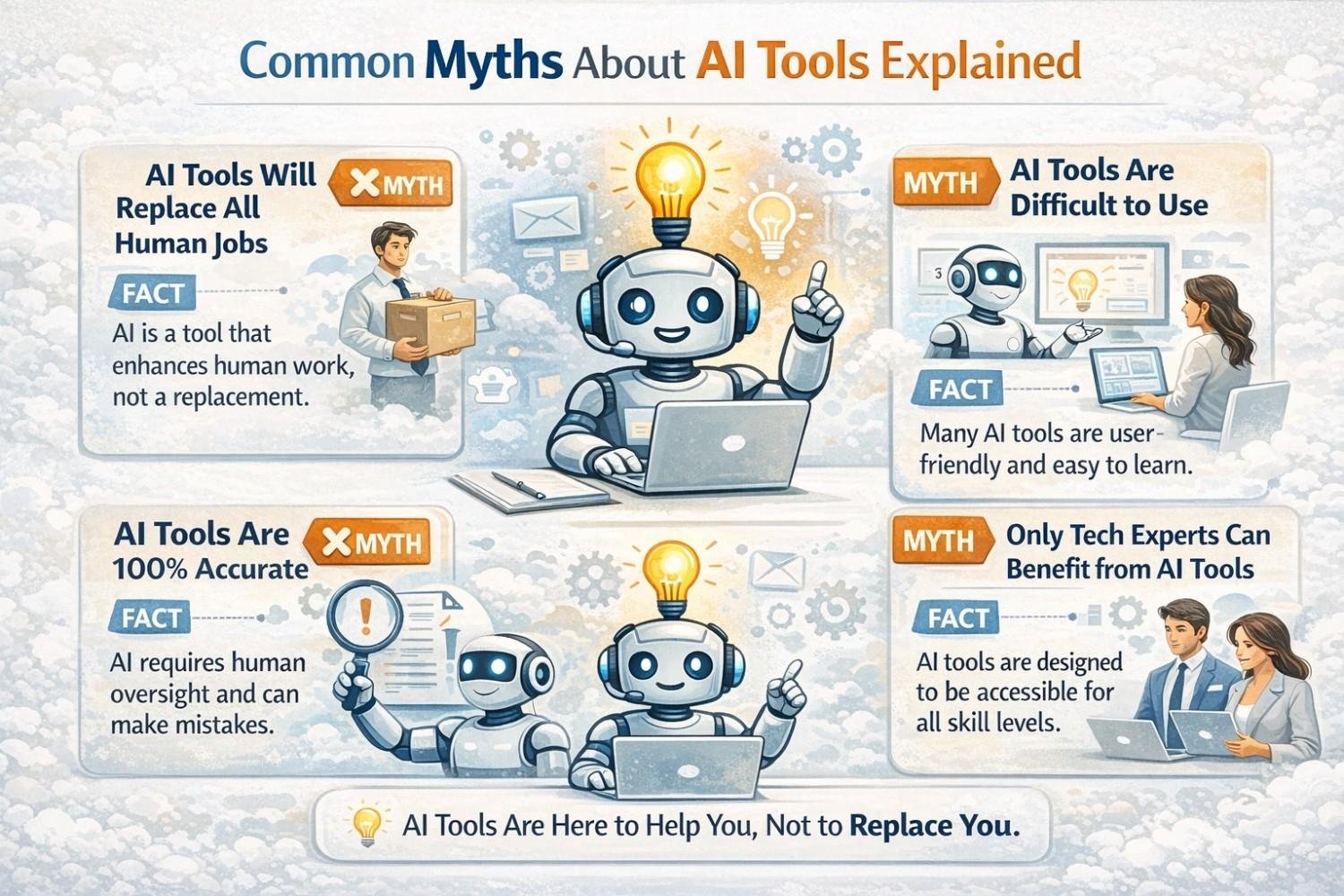
AI tools have quickly become one of the most talked-about technologies in the digital economy. From enterprise automation and cybersecurity to marketing, finance, and SaaS platforms, artificial intelligence is now deeply embedded in modern business operations. However, despite rapid adoption across Tier-1 markets such as the United States, United Kingdom, Canada, Australia, and Germany, many persistent myths still create confusion.
These misconceptions often delay AI adoption and prevent organizations from unlocking major gains in productivity, cost efficiency, and revenue growth. This SEO-optimized guide breaks down the most common AI myths, explains the real facts, and shows how businesses actually use AI software today.
Why AI Tools Matter for Modern Businesses
Today’s AI-powered software is no longer experimental or limited to tech giants. Modern AI is embedded across business systems, including:
- CRM and customer experience platforms
- Project management and workflow automation tools
- Email marketing and personalization engines
- Cybersecurity and fraud detection systems
- Financial planning and analytics software
High-value industries such as finance, insurance, healthcare, SaaS, and cloud computing are heavily investing in AI. As a result, AI-related keywords consistently generate high CPC and eCPM value in digital advertising.
Myth 1: AI Tools Will Replace All Human Jobs
This is the most widespread misunderstanding about artificial intelligence tools. While AI automates repetitive and data-heavy tasks, it does not eliminate the need for human creativity, judgment, and strategy.
The Reality
AI is designed to augment human productivity, not replace entire workforces.
- AI CRM systems help sales teams prioritize leads
- AI writing assistants support content creation
- AI analytics platforms improve executive decision-making
Across Tier-1 economies, businesses invest in AI primarily to make employees more productive—not obsolete.
Myth 2: AI Tools Are Only for Large Enterprises
Many assume that AI adoption requires massive budgets and enterprise infrastructure. This was true a decade ago—but not today.
The Reality
Modern SaaS AI tools are built specifically for startups, SMBs, and mid-market companies.
Cloud-based pricing models make AI accessible through affordable monthly subscriptions. Common SMB-friendly AI solutions include:
- AI email marketing platforms
- Customer support chatbots
- AI accounting and finance tools
- AI-powered project management software
AI has effectively become a democratized technology available to businesses of all sizes.
Myth 3: AI Tools Are Too Expensive
Cost concerns often discourage adoption, but in most cases AI software delivers strong ROI.
The Reality
Thanks to cloud infrastructure and pay-as-you-go pricing, AI tools often cost less than manual processes.
| Business Function | Traditional Cost | AI Tool Cost | Efficiency Impact |
|---|---|---|---|
| Customer Support | High staffing cost | Low SaaS fee | 24/7 automation |
| Marketing Analytics | Manual analysis | AI insights | Faster decisions |
| Fraud Detection | Reactive monitoring | Real-time AI | Lower risk |
In high-value sectors like fintech, insurance, and SaaS, AI adoption typically reduces operational costs significantly.
Myth 4: AI Tools Are Not Secure
Security fears are understandable—but often outdated.
The Reality
Leading enterprise AI platforms are built with advanced security frameworks and strict compliance standards.
Many reputable AI vendors support:
- GDPR (Europe)
- SOC 2 compliance
- ISO 27001
- HIPAA (healthcare)
In fact, AI is increasingly used to strengthen cybersecurity through real-time threat detection, fraud prevention, and anomaly monitoring.
Myth 5: AI Tools Require Advanced Technical Skills
Early AI systems required data scientists and engineers. Modern tools are very different.
The Reality
Most modern AI business tools are designed for non-technical users with:
- No-code automation builders
- Drag-and-drop dashboards
- Visual workflow editors
- Prebuilt AI templates
This usability is one of the biggest drivers behind the global surge in AI adoption.
Real-World Use Cases of AI Tools
Across industries, AI is already delivering measurable business impact:
- Predictive analytics for financial forecasting
- AI chatbots for customer engagement
- Automated ad optimization in digital marketing
- AI-driven CRM lead scoring
- Fraud detection in banking and insurance
These practical applications demonstrate that AI is no longer theoretical—it is operational.
Why AI Keywords Drive High CPC and eCPM
AI-related search terms attract premium advertising demand. Companies in SaaS, cloud computing, cybersecurity, and fintech aggressively bid on AI traffic because:
- Customer lifetime value (LTV) is high
- Enterprise deal sizes are large
- AI adoption budgets are growing
- Competition for qualified traffic is intense
This makes AI content particularly valuable for publishers targeting Tier-1 audiences.
Final Thoughts
Most fears surrounding AI tools are based on outdated assumptions. Modern AI software is practical, secure, affordable, and accessible to businesses of every size.
Organizations that move past these myths and adopt AI strategically will gain significant advantages in productivity, customer experience, and long-term growth. In today’s digital economy, understanding AI is no longer optional—it is a competitive necessity.